Outer Banks septic guide
Are cars over 30 years old exempt from inspection in North Carolina?
North Carolina exempts vehicles more than thirty years old from the annual safety inspection. What the exemption removes, what it leaves entirely intact, and what salt air does to an old car.
Yes, and it is one of the cleaner exemptions in Chapter 20 — no application, no special plate required, no annual paperwork. What it is not is a statement that the car is fine. The exemption removes an appointment; it does not remove a single one of the physical conditions the appointment was checking for.
The details
The rule is exactly as simple as it sounds: vehicles more than 30 years old exempt from North Carolina's annual safety inspection, per the Division's own safety inspections page. It sits as a carve-out from the general obligation, which is that every registered vehicle needs an annual safety inspection before registration renewal. Cross the thirty-year line and the annual test stops applying to that vehicle.
The policy logic is sensible enough. A car more than three decades old is overwhelmingly a hobby vehicle rather than daily transport, it typically covers very few miles a year, and its owner is usually far more intimately acquainted with its brakes and steering than any inspection station could become in twenty minutes. Applying a modern checklist to a vehicle built before most of the items on it existed produces friction without producing safety.
The gap the exemption opens is a real one, though, and it is worth naming rather than glossing over. The annual inspection is the one moment in a normal car's year when somebody who is not the owner looks at the brakes, the steering, the tires, the lights and the structure and has to write down what they found. Remove it and the only remaining check is the owner's own discipline. For a well-kept car in a heated garage that is plenty. For a car that has been sitting under a cover behind a cottage since the last owner died, it is nothing at all.
On this coast the specific hazard is not age, it is chemistry. Salt air does not care about model years. Brake lines and fuel lines corrode from the outside in, floor pans and frame rails go soft where sand and moisture collect, wiring insulation hardens, and every ground connection on the car develops resistance. An exempt vehicle that lives within sight of the ocean genuinely deserves more scrutiny than an inspected one that lives in Greensboro — which is the opposite of what the exemption's existence implies to most people.
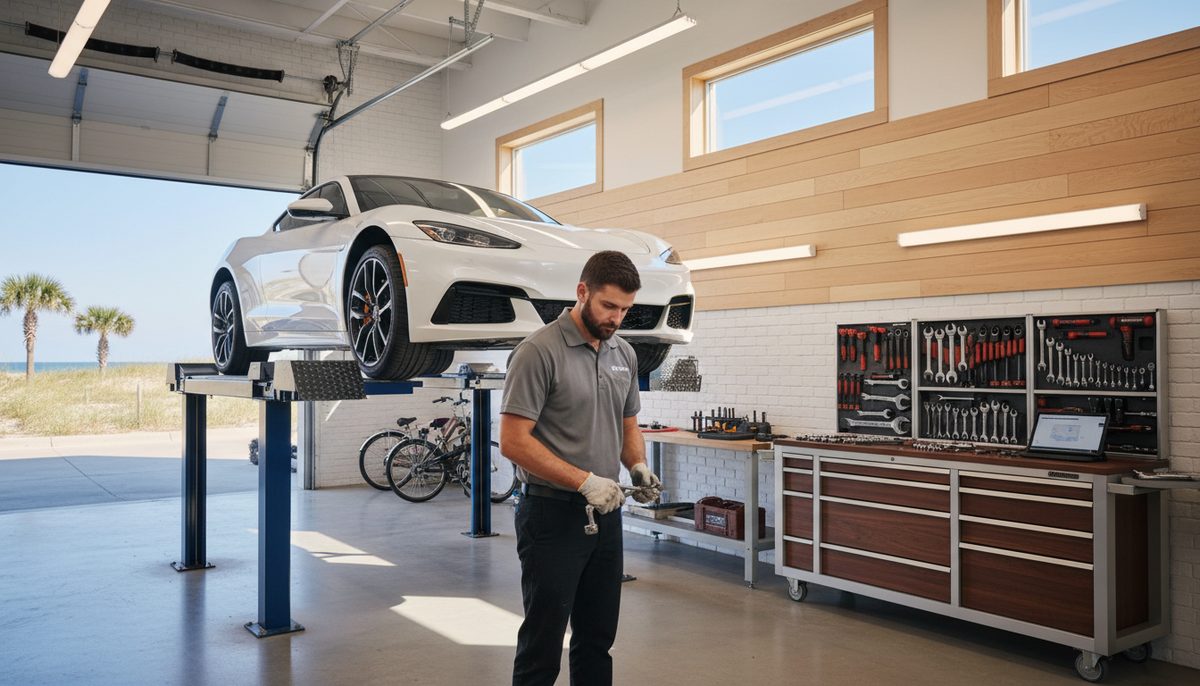
So the sensible practice for an exempt car here is to run the inspection checklist yourself, annually, on the same calendar date you would have been booked in. Lights, horn, wipers, mirrors, tires including the sidewalls and the date codes, brakes and the lines that feed them, steering play, and a proper look underneath on a lift rather than a flashlight-and-optimism inspection from the driveway. Most independent shops will do exactly this as a paid safety check for an owner who asks, and it is an hour well spent.
One thing the exemption definitely does not touch: the rules governing whoever works on the car. Restoration and mechanical work on a thirty-year-old vehicle falls under the Motor Vehicle Repair Act like any other job, and where the work will run past three hundred and fifty dollars the written estimate required over $350 requirement applies in full. Old-car work has an unusual tendency to expand once panels come off, which makes the written estimate and the ten percent ceiling more valuable on a restoration than on almost anything else.
Over thirty years old means no annual test, not no annual attention. Keep the checklist, keep the salt in mind, and take the written estimate when the work starts growing.
On the record: vehicles more than 30 years old exempt (NCDMV — Vehicle Safety Inspection, Exemptions (ncdot.gov, retrieved 2026-09-17)) · annual safety inspection before registration renewal (NCDMV — Vehicle Safety Inspection (ncdot.gov, retrieved 2026-09-17)) · written estimate required over $350 (N.C.G.S. 20-354.3 — Written motor vehicle repair estimate and disclosure statement required (ncleg.gov, retrieved 2026-09-17))
Hand-verified 2026-09-17 against the primary sources named above; where a fact could not be verified it was left out, never guessed.